
-
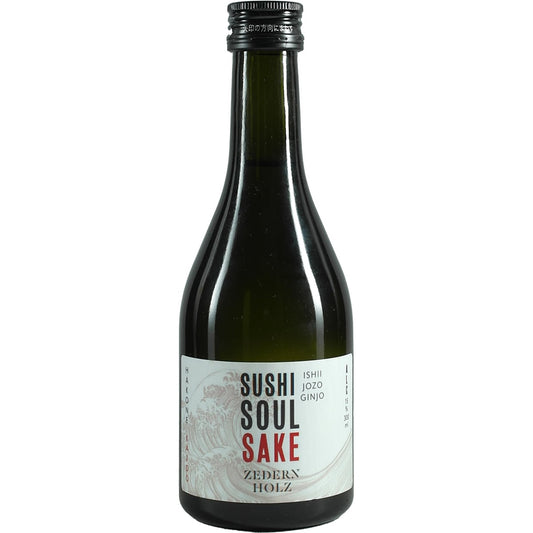
Ishii Jozo Taru Sake Sushi & Soul 300ml
Regular price 9,00 €Regular priceUnit price per Unit price 30,00 € per L
Taru Sake
When cedar wood took sake on a journey
Before bottles became the standard in the 20th century, sake was transported and sold in cedar wood barrels. The barrel was primarily a container, but it also left its mark: woody notes infused the sake. Taruzake matures briefly in a wooden barrel, known as a taru; usually for just a few days. It is precisely this brief period that creates its appeal. It gives the wood space without turning Taru Sake into a long-aged barrel product.
Cedar defines the aroma and spice. The Japanese word sugi refers to cedar, whose pleasant fragrance made it the preferred wood for Taru barrels. This maturation process can develop woody and spicy aromas. In the glass, two levels meet: the brewed sake and the accent provided by the barrel. Thus, Taru Sake tells its story not only through an old form of transport, but through a historical side effect that has today become the actual taste experience.
Short wood contact instead of years of aging
The difference from Koshu helps with orientation. Koshu is aged sake, typically at least one year old. With Taruzake, however, the focus is on short maturation in a wooden barrel. The duration and the vessel define the artisanal framework; how clearly the wood and spice emerge depends on the specific bottling.
The fact that Taruzake is hardly a standard today fits its unique character. While almost all sake sold in the past passed through cedar barrels, Taruzake continues to showcase the effect of wood contact. Kiku Masamune still employs barrel makers who craft such barrels. This ensures that a historical transport vessel remains not just a memento, but a tool for aroma and flavor.
A bottle as a guide
The Ishii Jozo Taru Sake Sushi & Soul 300 ml makes this concept concrete while setting its own temporal emphasis. Selected Yamada-Nishiki rice is used for this Ginjo. Before bottling, it is stored in a cedar wood barrel for a few weeks, thereby acquiring its woody note. Its longer time in the barrel distinguishes it from the practice often described in specialist sources, which frequently lasts only a few days, and shows how an individual bottling can interpret the basic idea independently.
This bottle also offers two perspectives when serving: it can be enjoyed at room temperature or warmed. Comparing the two temperatures focuses on the specific sake rather than abstract style rules. It was bottled exclusively for the Munich restaurant Sushi & Soul; it is now only available at JSake. Thus, a single bottle connects selected rice, several weeks of cedar wood contact, and its own Munich history with the long development of the Taru barrel.