
-
Sohomare Karakuchi
Regular price 32,50 €Regular priceUnit price per Unit price 45,14 € per L -
Sohomare Kimoto Junmai Daiginjo Tuxedo
Regular price 67,00 €Regular priceUnit price per Unit price 93,06 € per L

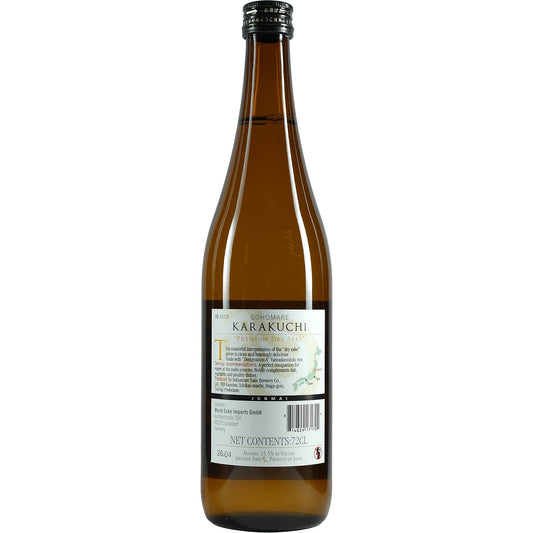

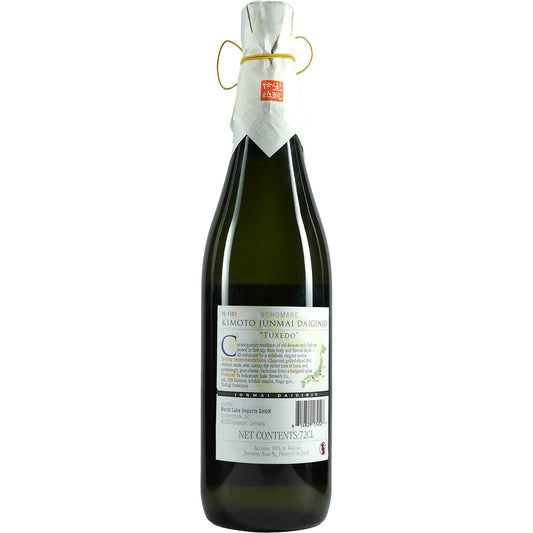
Sohomare
Sohomare Sake – Family History and Kimoto Craftsmanship from Tochigi
Sohomare combines carefully selected brewing rice with traditional Kimoto brewing techniques and a special passion for blending. Different vintages, yeasts, and batches are harmonized to create sake with depth, a creamy texture, and elegance. This approach is driven by the Kono family, which has led Sohomare since its founding in 1872.
A Brewing Family with Roots in Shiga
The family's history extends beyond its current brewing location. Their ancestors lived in Hino in Shiga Prefecture and were part of the Omi merchant community. Along with other families, they moved to Utsunomiya in today's Tochigi Prefecture. Hino Street there still bears a reminder of this connection.
In 1872, the family founded its brewery in the Haga district. Jun Kono leads Sohomare as the fifth generation; his son Michihiro is also part of the family business. The family's connection to Tochigi is also evident in the brewing water: Sohomare uses well water that originates in the Kinu River.
Yamada Nishiki from Hyogo – a Deliberately Cultivated Connection
When it comes to rice, Sohomare looks beyond the borders of its own prefecture. Toku-A Yamada Nishiki from Hyogo plays a central role in the Junmai, Ginjo, and Daiginjo lines. This includes the highly regarded Yokawa and Tojo growing regions.
This rice supply has developed over decades. As early as the 1950s, Jun Kono's father built relationships with the agricultural cooperative in Hyogo and began sourcing Yamada Nishiki. Later, increasing quantities were added from the Toku-A growing regions. For the family, the suitability of the rice for their sake is more important than exclusively regional origin.
Kimoto: Craftsmanship That Takes Time
Jun Kono relies on the traditional Kimoto method. In this process, naturally occurring lactic acid bacteria develop an acidic environment in the yeast starter. The traditional method also includes working and crushing the rice-koji mixture. The process requires time, experience, and careful monitoring.
At Sohomare, this craftsmanship is combined with a nuanced approach to aging and composition. The Kimoto Junmai Daiginjo, for example, is described by the brewery as having a soft, slightly creamy start, a dense mid-palate, and elegant aromatics. Strength and delicacy are not mutually exclusive here.
The Art of Bringing Different Batches Together
A distinctive aspect of Sohomare is blending. Instead of considering each batch on its own, the brewery harmonizes different lots to create a unified flavor profile. Three vintages and four yeast varieties can be combined; for the Junmai Daiginjo Kimoto, more than ten batches are sometimes blended.
The connection to wine culture lies in this precise composition: It is not the number of components that matters, but their interplay. Anyone wishing to experience sake with texture and depth of flavor will find at Sohomare a brewery that has shaped this style for generations through its own independent decisions.