
-
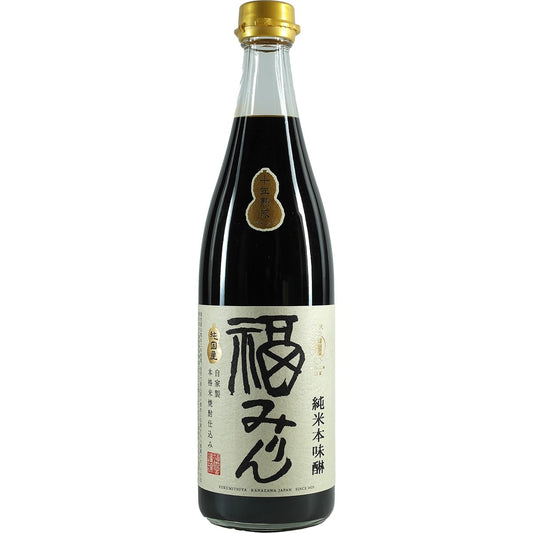
Fukumirin 10 Years 720ml
Regular price 56,50 €Regular priceUnit price per Unit price 78,47 € per L
Mirin
Mirin in recipes and in our selection
Three recipes demonstrate mirin in varying quantities and preparation steps: a miso marinade for black cod, a sukiyaki sauce, and braised Chinese cabbage with fried tofu. The Fukumirin 10 Years 720ml complements this culinary perspective as a standalone bottle. The Fukumirin is made with the producer's own shochu and a special rice; the rice is aged for ten years in ceramic tanks. Its flavor is described as savory and sweet.
From water bath to sukiyaki sauce
For the marinade, white miso, sake, sugar, and mirin are heated over a water bath. After about 15 minutes, the sugar has dissolved and begins to caramelize; at the same time, the miso darkens. Yuzu or lime juice is added only after cooling, before the fish is placed in the marinade overnight.
The sukiyaki sauce combines 180 milliliters of mirin with dashi, sugar, and sake. Dark soy sauce is added as soon as the liquid boils again. For the braised Chinese cabbage with fried tofu, mirin is mentioned alongside soy sauce and sake when a more robust seasoning is desired. The recipes thus demonstrate varying quantities and processes.
Fukumirin as a standalone bottle
The Fukumirin is produced exclusively with house-made shochu and a special rice. Its flavor is described as savory and sweet. These details stand on their own; the three recipes provide a culinary context for mirin, but not a specific use or dosage for this product.
Thus, two perspectives meet in this category: mirin as a component of marinade, sauce, and braised dish – and a standalone bottle with a savory and sweet profile.